Introduction
If you live or work in the Sriharikota–Sullurupeta area and someone in your family is connected to the Department of Space, chances are you’ve already heard of Space Central School. People usually search for this school because they want to know if their child is eligible to join, what the fees look like, and how it compares to other schools nearby in DOS Colony and Sullurpeta.
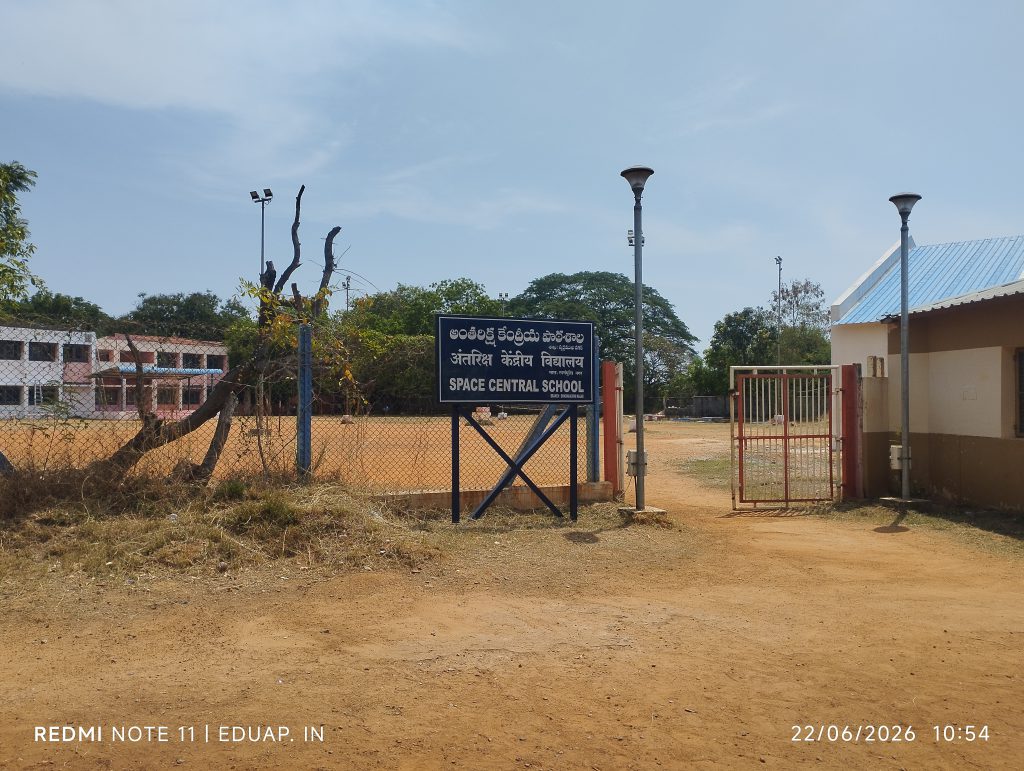
This article puts together what’s actually known about the school — its history, who can get admission, the fee process, and a few things that are not as clearly documented online. By the end, you’ll have a realistic picture instead of just marketing language.
Quick Facts Table
| Topic | Details |
|---|---|
| Subject | Space Central School (SCS), serving Sriharikota / DOS Colony / Sullurupeta area |
| Purpose | Education for children of Department of Space (ISRO/SDSC SHAR) employees and supporting staff |
| Key Information | Established 1973, CBSE-affiliated, Classes 1–12, English medium, co-educational |
| Important Notes | Has branches at Sriharikota, Pulicat Nagar, and Swarnamukhinagar; admission priority goes to DOS-linked families |
What is Space Central School, and why is it tied to DOS Colony?
Space Central School was set up by the Department of Space, part of ISRO, and started running from July 1973. Its main job has always been to educate the children of people working at SDSC SHAR (the Satish Dhawan Space Centre at Sriharikota). DOS Colony is essentially the residential township built for these employees, so the school exists largely because of that colony — it’s not a regular private or government school that just happens to be nearby.
Because the main campus sits inside the Sriharikota township, the school also runs branches a bit further out, in Pulicat Nagar and Swarnamukhinagar near Sullurpet, for families who live in those areas and can’t commute daily to the main campus.
Who can actually get admission here?
This is probably the most searched question, and it’s worth being upfront about it: priority admission goes to children of Department of Space employees. After that, children of staff working in supporting organizations — State Bank of India branches serving the colony, the post office, and Satish Dhawan Memorial Hospital — are also considered. If you have no connection to any of these, getting a seat can be difficult, since the school primarily exists to serve this specific employee community rather than the general public.
Locaton:
Classes offered and medium of instruction
The school covers Classes 1 through 12, with English as the medium of instruction. It’s a full senior secondary school, meaning students can complete their entire schooling here without switching institutions for the +2 stage — something that matters for families who get transferred in and out of Sriharikota fairly often, which is common with central government postings.
Affiliation and academic structure
Space Central School is affiliated with the Central Board of Secondary Education (CBSE). One official record lists the affiliation as provisional, valid through 2029, which is a fairly normal status for CBSE schools and doesn’t by itself indicate a problem — it just means renewal documentation needs to be kept current. The academic session typically starts in April, in line with most CBSE schools in this region rather than the June-start pattern some state board schools follow.
Fee structure and payment rules
The fee setup here is simpler than most private schools, but it comes with stricter discipline around deadlines. A few specifics worth knowing:
- New admissions and re-admissions involve a nominal fee of around Rs. 25.
- Tuition fee, referred to as Vidyalaya Vikas Nidhi (VVN), is collected every three months rather than monthly.
- If payment is delayed past the due date, a penalty of roughly Rs. 1 per working day is added, up to the 20th of that month.
- If the fee is still unpaid after the 20th, the student’s name can be removed from the rolls — though it can be restored by paying the re-admission fee along with the penalty.
This is stricter than what many parents expect from a low-fee government-linked school, so it’s worth marking calendar reminders for the quarterly due dates.
School size and teaching ratio
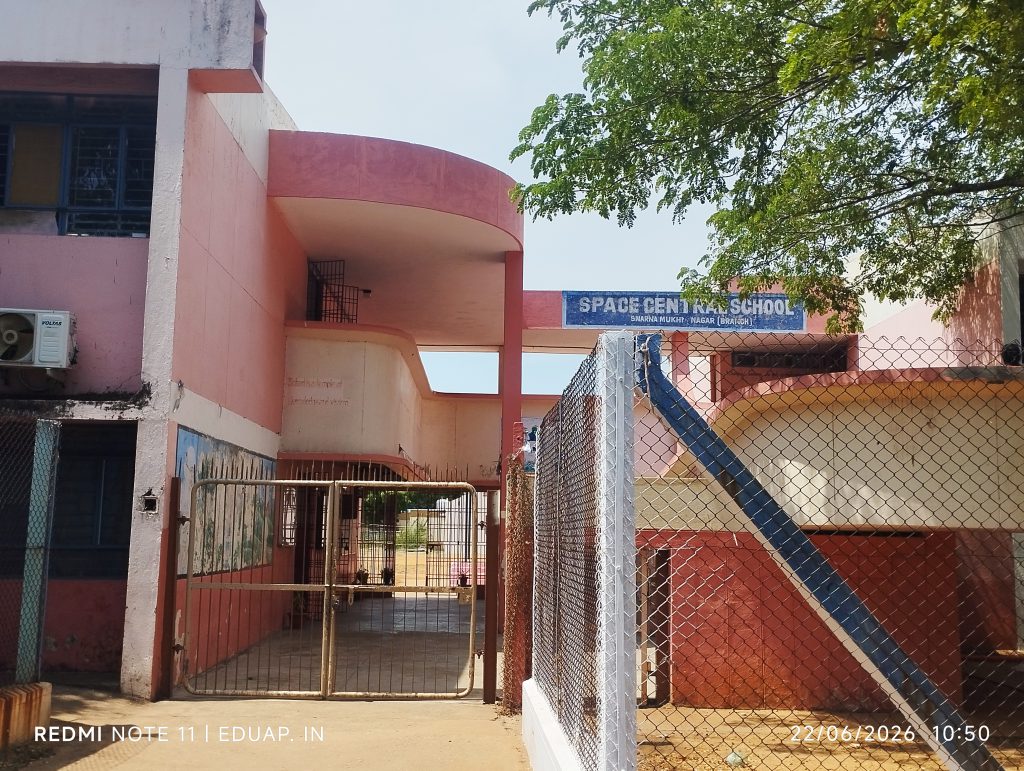
Based on UDISE+ data, the school (combining its locations under this code) has over 1,800 students and around 46 teachers, putting the pupil-teacher ratio close to 39:1. That’s higher than what’s considered ideal (closer to 25:1 or 30:1), which is something parents researching class sizes should factor in — larger ratios often mean less one-on-one attention, even in an otherwise well-run school.
Pros and Cons
| Pros | Cons |
|---|---|
| Low, government-regulated fee structure | Admission largely limited to DOS/SDSC-linked families |
| CBSE affiliation with continuity from Class 1 to 12 | Pupil-teacher ratio is on the higher side |
| Long-running institution (since 1973) with established systems | Public information about specific branches (like DOS Colony itself) is limited and sometimes inconsistent across listing sites |
| Multiple branches reduce commute for nearby colonies | Strict fee penalty and roll-removal policy for late payment |
Important Things to Know
A few honest notes before you rely on this for decisions:
- Online listings for this school carry inconsistent addresses and contact numbers — some show Sriharikota as the main address, others point to the Pulicat Nagar branch in Sullurupeta. If you’re contacting the school, it’s worth confirming the right branch number directly rather than trusting the first search result.
- Details specifically about a “DOS Colony” branch, separate from the main Sriharikota campus, aren’t clearly documented in public sources. In practice, DOS Colony appears to be the residential area the main Sriharikota campus serves, rather than a distinct school location.
- Principal and staff details found online may be outdated, since transfers are common in central government institutions. Always verify current leadership and contact details with the school office.
- This is not an “open admission” school in the way most CBSE private schools are — non-DOS families should check eligibility before assuming they can apply.
Frequently Asked Questions
1. Is Space Central School open to children outside Department of Space families? Limited seats may be available for children of employees in supporting agencies like SBI, the post office, or Satish Dhawan Memorial Hospital, but priority is given to Department of Space families.
2. What board is Space Central School affiliated with? It’s affiliated with CBSE, and one official record shows this affiliation running through 2029 in provisional status.
3. How is the fee collected, and what happens if I pay late? Tuition (VVN) is collected quarterly. Late payments attract a small daily penalty, and prolonged non-payment can lead to a student’s name being struck off, though it can be restored with a re-admission fee.
4. Does the school have branches outside Sriharikota? Yes — branches operate in Pulicat Nagar and Swarnamukhinagar near Sullurpet, in addition to the main Sriharikota campus.
5. What is the pupil-teacher ratio like? Based on available UDISE+ data, it’s around 39 students per teacher, which is higher than many parents would consider ideal.
Final words
Space Central School is best understood as an employee-welfare school built around the Department of Space’s workforce at Sriharikota, rather than a general-admission CBSE school. It has a long history, low fees, and CBSE affiliation going back decades, but admission access is genuinely limited for families with no connection to DOS or its support agencies. If you do qualify for admission, it’s a stable, low-cost option — but go in with realistic expectations about class sizes and the strict fee-payment timeline, and confirm current contact details directly with the school rather than relying on any single online listing.
